Investment Funds and ETFs
1. Traditional Mutual Funds 🏦
TheA worldmutual of investments can seem complicated at first, but one of the most accessible ways to investfund is throughlike mutuala fundscollective andbasket ETFs (exchange-traded funds). In this article, we will explain what these instruments are, their types, and the differences between active and passive management. Additionally, we will explore the advantages and disadvantages of each type of management.
Mutual Funds
Mutual funds are financial vehicles that pool money fromwhere many investors pool their money together. A team of professionals is in charge of moving that capital to buy assets (stocks, bonds, etc.) based on the fund's strategy.
Depending on what they invest in different assets, such as stocks, bonds, or a mix of both. These funds are managed by professionals who decide where and how to invest the money depending on the type of fund.
Mutual fundsthey are mainlymanaged, dividedwe into:find these main types:
- 📈
Equity Funds (Active Management):
1990.These funds primarilyThey invest mainly in company stocks."Active management" means that a manager or team ofHere, managerscarefully selects stocks in an attempttry toachieve returns superior to"beat theoverallmarket"market.byAnstock-pickingiconicwhatsuccesstheystorythink will go up. The perfect historical example is Peter Lynch, who managed the MagellanFund,FundmanagedandbyachievedPeteraLynchspectacularfrom 1977 to 1990, achieving an29% average annual returnofbetweenover197729%.and - 📉
- ⚖️
ManagersBalancedaim/to maximize returns while minimizing risk, selecting securities they deem promising.
Fixed Income Funds (Active Management):
FixedThey incomebuy fundsdebt invest(government inor bondscorporate bonds). Managers look to scrape together the maximum return by closely watching interest rates and otherdefault debtrisks.
instruments.
BalancedMixed Funds (Active Management):
BalancedA fundsmix combineof fixedthe incometwo andprevious equity assets. Their goal istypes to balance riskrisk. andThe return.classic Forexample example,is they may invest 60% in stocks and 40% in bonds (athe 60/40 strategy)portfolio (60% stocks, 40% bonds), orwhich vice versa,shifts depending on the manager's strategy.moves.
🔄 What happens to the profits? Accumulation vs. Distribution
-
Accumulation funds: If the companies in the basket pay dividends, the fund automatically reinvests them to buy more shares. This makes your money grow faster thanks to compound interest. It is the ideal option to grow your wealth.
-
Distribution funds: Dividends or interest are paid directly into your checking account on a regular basis. Useful if you already live off your investments and need cash month by month.
2. The Acronym Labyrinth: ETP, ETF, ETN, and ETC 🌐
This is where people usually get massively confused. The financial industry uses the word ETP as an umbrella term that hides different exchange-traded products. Let’s crack the code:
📦 ETP (Exchange Traded Product): This is the generic term. It simply means "Exchange Traded Product". If it trades on the market just like a stock, it’s an ETP. Within this big family, we find the following three.
- 📊 ETF (Exchange Traded Fund): This is an exchange-traded fund. Its goal is usually to track an entire index (like the S&P 500) or a specific sector (semiconductors, cybersecurity, defense, health). When you buy a share, you own a proportional part of all the stocks that make up that index. They are physically backed by the assets they buy.
- 🛢️ ETC (Exchange Traded Commodity): These are exchange-traded products specialized in commodities (gold, oil, gas, wheat...). Instead of buying a physical gold bar or a crude oil barrel and putting it in your storage room, you buy an ETC that mirrors its price. Some are physically backed (they have the gold locked in a vault) and others use financial contracts.
- ⚠️ ETN (Exchange Traded Note): Careful with these. They are not funds; they are debt securities (bank notes) issued by a financial institution to replicate an index or an exotic asset. The real danger here is the "counterparty risk": if the bank that issued the ETN goes bankrupt, you are left with nothing, as there are no physical shares backing your money, just the bank's promise to pay.
3. How do ETFs work and where to find them? 🛒
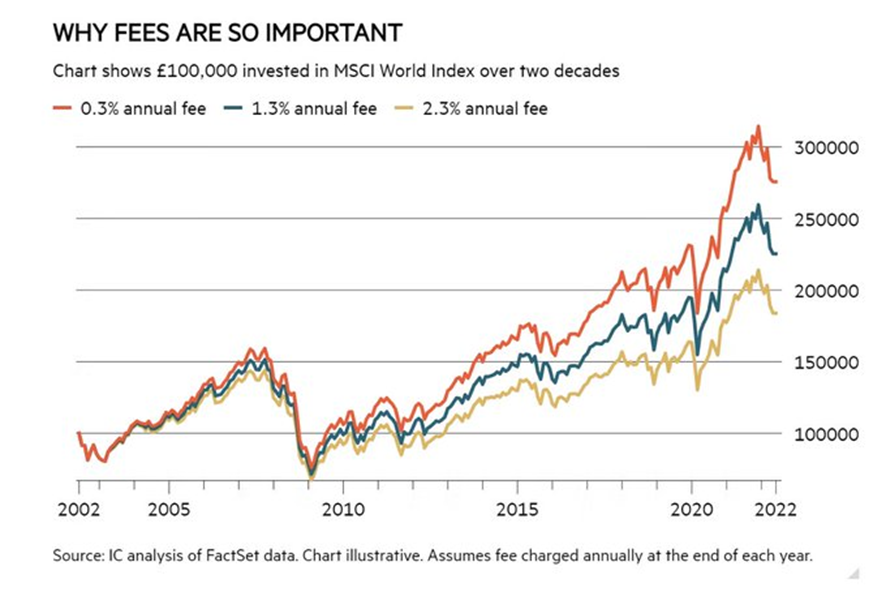
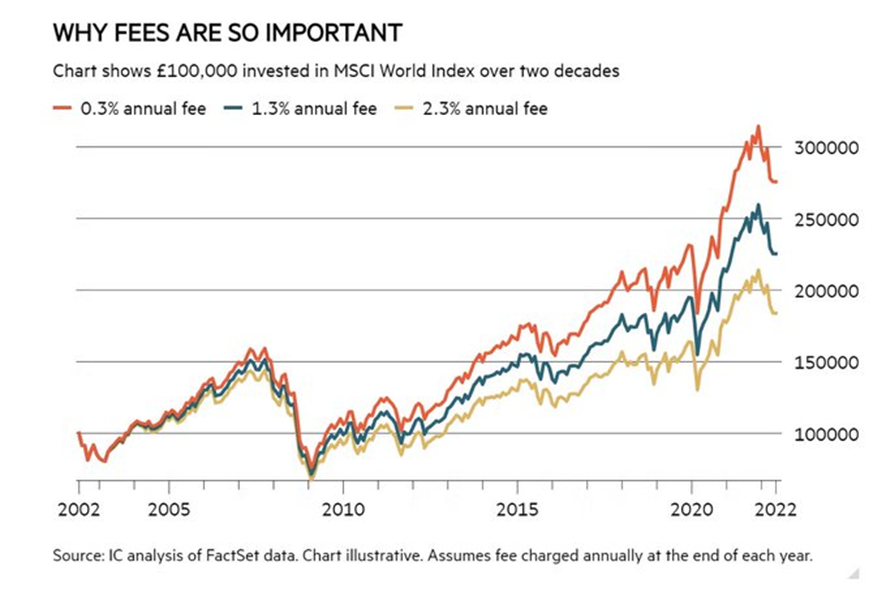
Unlike traditional mutual funds, which only calculate their price once a day when the market closes, ETFs are bought and sold in real-time during market hours, exactly like an Apple or Telefónica stock. They have two massive advantages: they are extremely transparent and their fees are ridiculously low (usually ranging between 0.1% and 0.9%, reaching 1.5% at the absolute most). In contrast, traditional active management can crush you with cumulative fees between 3% and 15% if you add up management, subscription, redemption, or performance fees.
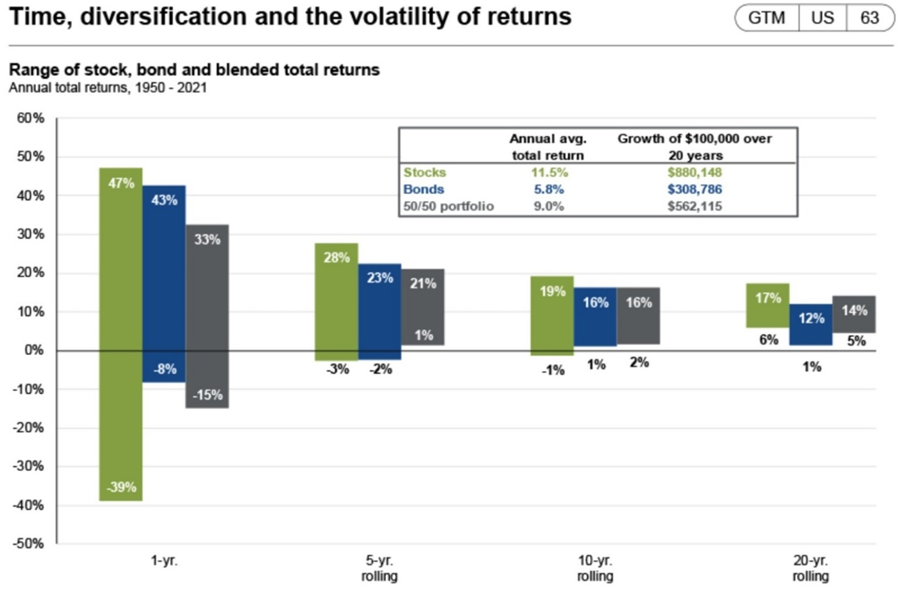
Inyour thisportfolio imagewith these assets, you canhave seetwo paths:
-
Manual Option: You open an account with a broker yourself, search for the
returnsETFsofyouthe different types of assetswant, andhowbuythey varythem according tovolatility.your strategy. -
AccumulationAutomated Option (Robo-Advisor): An automated manager gives you a risk profile test andDistributiondesignsFundsan ETF portfolio for you, rebalancing the money automatically without you having to lift a finger.
🔍 Essential pages to search and compare ETFs:
AccumulationFunds: The profits generatedJustETF (
suchExcellentasfordividendsEuropeanorinvestors)interest) are automatically reinvested in the fund, increasing its value over time.DistributionFunds:ETFdb
The(Aprofitscolossalaredatabase)distributed-
investorsETF.com
in(In-depththeanalysis)form of periodic payments, which can be attractive if you seek regular income.
4. Great Debate: Active vs. Passive Management 🥊
**To Websitedecide forwhere Fundto Search:put https://www.morningstar.es/es/funds/default.aspxyour (in the search bar,savings, you need to enterunderstand the name or ISINrules of the fund.game Youfor willeach side:
🧠 Active Management (Traditional Funds)
-
The promise: A star manager is going to study the market to dodge the hits and find the best opportunities to beat the benchmark index.
-
The harsh reality: Very few manage to do it in the long run. Plus, the drag of high fees makes it very difficult to come out on top. Their big advantage is the flexibility to hold liquidity (cash) if they see a market crash coming.
🤖 Passive Management (ETFs and Index Funds)
-
The promise: We don't try to be
ablesmartertothansee:anyoneTheelse.fund's performance, Fees and Top 10 holdings.What Are ETFs?ETFs (Exchange-Traded Funds) are funds that trade on the stock market like individual stocks. This means you can buy and sell them easily during market hours. Most ETFs followpassive managementstrategies.ETFs typically replicate an index, such asIf the S&P 500(SPY),goesfollowingup,itsyourcompositionportfolioandgoesperformance.up;Thereif the S&P 500 goes down, your portfolio goes down. You replicate the exact market. -
The big advantage: Since they don't need an army of analysts collecting millionaire bonuses, costs are
makealsominimal.thematicThoseETFs,feesuchsavingsas those focused on oil, renewable energy, semiconductors, defense, or healthcare. They are less expensive than actively managed funds, with fees typically ranging from 0.1% to 0.9%, and at most around 1.5%, compared to 3% to 15%stay inactiveyourmanagementpocket(includingand,maintenance,inexit,theandlongsuccessrun,fees).- a
ManualdifferenceOption: You buy and sell ETFs yourself according toin yourgoals.portfolio's AutomatedfinalOptionreturn.(RoboTheAdvisor): A robo advisordownside isan automated servicethatmanages your investments for you, based on your preferences and risk profile.
- massive
**Websites for ETF Search:(Inif thesearchmarketbar,takes a dive, youneed to entertake thenamefullorhitISINwithoutof the ETF) You will be able to see:The ETF's performance, Fees and Top 10 holdings.anesthesia.In
theend,
keyActivetheManagement
forAdvantages:- any
Potentialretail investor comes down toachievediversifying,higherkeepingreturns than the market.Flexibility to adapt to market changes.
Disadvantages:Higher fees due to the involvement of managers.No guarantee of outperforming the market.
Passive ManagementAdvantages:Lower costs,costs astherelowisasless human intervention.Simplicitypossible, andtransparency:lettingreplicatestimethedoperformanceitsof an index.
Disadvantages:Does not aim to outperform the market, only to match it.Less ability to adapt to specific market situations.