📉 𝗟𝗼𝘀𝘀 𝗔𝘃𝗲𝗿𝘀𝗶𝗼𝗻
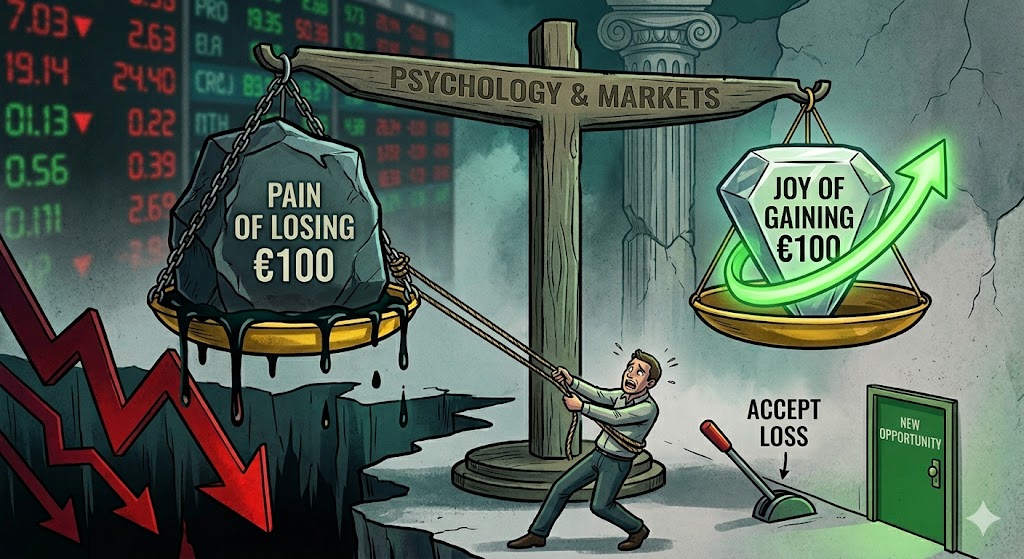
Have you ever noticed that closing a trade €100 in the red hurts way more than the thrill you get from bagging a €100 profit? It’s not that you’re "weak" or "indecisive"—it’s that your brain is biologically hardwired to avoid pain at all costs.
We’re moving forward with this series where I blend my background in Psychology 🎓 with the real-world grit of the markets 📈. Today, we’re diving into why we’d often rather go down with the ship than jump into a lifeboat while there’s still time.
💔 𝗪𝗵𝗮𝘁 𝗶𝘀 𝗟𝗼𝘀𝘀 𝗔𝘃𝗲𝗿𝘀𝗶𝗼𝗻?
Coined by Nobel laureates Kahneman and Tversky, it’s the mental tendency to feel the sting of a loss twice as intensely as the joy of an equivalent gain.
In trading, this is a recipe for disaster: it turns us into irrational actors.
🧟♂️ 𝗧𝗵𝗲 "𝗭𝗼𝗺𝗯𝗶𝗲 𝗦𝘁𝗼𝗰𝗸" 𝗚𝗿𝗮𝘃𝗲𝘆𝗮𝗿𝗱
Does any of this sound familiar?
Bag-holding: You’re down 30% on a position. You know the fundamentals have crumbled, but you won't sell because "it’s not a loss until I hit the button."
Cutting winners too short: As soon as you see a bit of green, you bail out of fear that the market will "steal" your profit.
Marrying the trade: Your portfolio ends up full of "zombies"—assets that are going nowhere, but you keep them just to avoid admitting you were wrong.
⚠️ 𝗪𝗵𝘆 𝗶𝘁 𝗸𝗶𝗹𝗹𝘀 𝘆𝗼𝘂𝗿 𝗿𝗲𝘁𝘂𝗿𝗻𝘀
The problem isn't losing—losing is just the cost of doing business. The real problem is poorly managing those losses. By failing to cut ties early, you let a small mistake turn into a black hole that sucks up your capital and, even worse, your mental peace.
It turns into "toxic hope": waiting for a miracle that rarely shows up.
🛠️ 𝗛𝗼𝘄 𝘁𝗼 𝗵𝗮𝗰𝗸 𝘆𝗼𝘂𝗿 𝗯𝗿𝗮𝗶𝗻 𝗮𝗻𝗱 𝗹𝗲𝘁 𝗴𝗼
To survive on eToro and see your account grow, you need to learn how to lose like a pro:
The "Fresh Start" Test: Ask yourself: "If I didn't own this stock today, would I buy it at this price?" If the answer is a hard "no," then why are you still holding the bag?
Accept the "Toll": Look at losses as the entry ticket for future gains. A Stop-Loss hit on time is a victory for your discipline, not a financial defeat.
Focus on Process, not P&L: If you followed your plan and got stopped out, you traded well. The outcome of a single trade is noise; what matters is your equity curve over the long haul.
"The market is a teacher that charges a high tuition, but its lessons are gold. Don't let the fear of losing a little make you lose it all."